Nov 28, 2024
Expert Project Management Solutions for Healthcare & Sterile Services
Every year, NHS trusts invest millions in new decontamination systems, sterile processing tracking technology, and CSSD modernisation projects. Yet industry studies reveal a sobering truth: over 60% of healthcare technology projects fail to deliver their promised benefits.
The difference between success and failure rarely lies in the technology itself. It's in the project management expertise that bridges the gap between purchasing systems and actually making them work in the demanding world of hospital sterilisation and decontamination units.
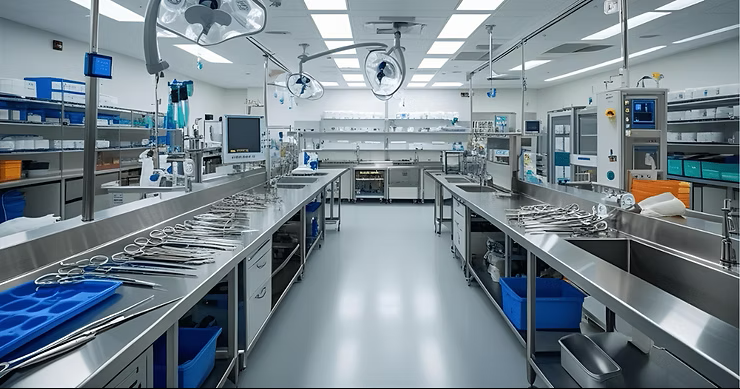
Sterile Services Department (SSD).
GM61 Limited has spent over 10 years managing these critical implementations, witnessing first-hand why some Central Sterile Supply Departments (CSSDs) thrive with new technology while others struggle with expensive systems that complicate rather than streamline their operations.
Here's what we've learned about why sterile services project management determines the fate of healthcare decontamination investments.
The Unforgiving Reality of Sterile Services
Implementation
Unlike other hospital departments, where new systems can be phased in gradually, sterile services project management operates under constraints that would terrify most project managers:
Surgery cannot wait
Operating theatres depend on continuous instrument availability. Any disruption to sterile processing workflows directly impacts patient care and hospital revenue.
Compliance is mandatory from day one
HTM 01-01 and ISO 13485 standards don't offer grace periods for "learning curves." New systems must maintain full regulatory compliance throughout implementation.
Staff expertise is irreplaceable
Experienced sterile processing technicians possess specialised knowledge that takes years to develop. Project management approaches that ignore this expertise are doomed to fail.
Operational windows are narrow
Implementation work must fit around 24/7 processing demands, often limiting access to live systems to brief maintenance windows.
These constraints make healthcare decontamination project management one of the most challenging specialisations in healthcare IT implementation. It's also why generic project management approaches consistently fail in sterile services environments.
What Makes Sterile Services Projects Different
Most project managers approach healthcare implementations like business software rollouts. This fundamental misunderstanding explains why so many hospital sterilisation and decontamination unit projects struggle.
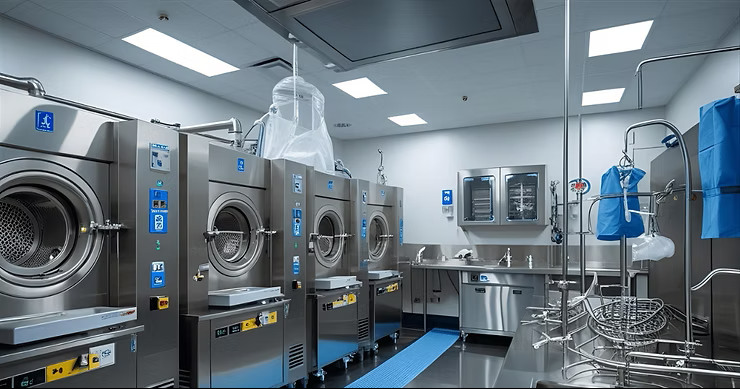
Industrial-grade autoclave sterilisers.
Business Impact vs. Patient Safety Impact
In corporate environments, system downtime means productivity loss. In sterile services, downtime means surgical delays that directly affect patient outcomes. This reality demands project management methodologies specifically designed for healthcare's non-negotiable operational requirements.
User Training vs. Professional Validation
Business users learn new software to improve efficiency. Healthcare professionals need confidence that new systems maintain the safety and compliance standards their professional licenses depend on. Effective sterile services project management addresses professional credibility, not just technical competency.
Change Management vs. Clinical Workflow Integration
Corporate change management focuses on adoption and efficiency. Healthcare project management must ensure new systems enhance rather than disrupt established clinical workflows that have evolved specifically to protect patient safety.
System Integration vs. Regulatory Compliance
Business implementations prioritise functionality and user experience. Healthcare decontamination projects must satisfy complex regulatory requirements that can override user preferences and design aesthetics.
The GM61 Methodology: Healthcare-Grade Project Management
GM61's approach to sterile services project management combines rigorous project discipline with deep understanding of healthcare operational realities. Our methodology has evolved through direct experience managing implementations in NHS trusts and private hospitals across the UK.
Discovery & Assessment: Understanding the Real Environment
Our process begins with comprehensive assessment that goes far beyond technical requirements:
1. Current Workflow Analysis
Detailed mapping of existing sterile processing workflows, including variations for different instrument types, emergency procedures, and shift handoffs that standard assessments miss.
2. Staff Capability Assessment
Evaluation of current team skills, training needs, and change readiness, recognising that sterile processing expertise represents years of specialised knowledge that must be respected and leveraged.
3. Technology Infrastructure Review
Analysis of existing systems, integration requirements, and technical constraints specific to sterile services environments, including specialised equipment interfaces and compliance monitoring needs.
4. Compliance Gap Analysis
Thorough review of current regulatory adherence and identification of areas where new systems must maintain or improve compliance rather than creating new risks.
5. Budget and Resource Evaluation
Realistic assessment of implementation costs, including often-overlooked factors like temporary staffing during transition periods and compliance validation expenses.
Strategic Planning & Design: Building for Healthcare Success
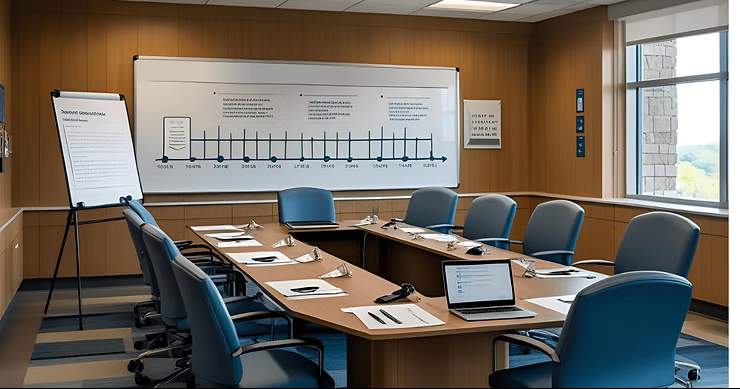
Conference room prepared for a strategic project planning meeting.
Based on discovery findings, we develop detailed project plans that address the unique challenges of healthcare decontamination implementations:
1. Comprehensive Risk Assessment
Identification and mitigation strategies for risks specific to sterile services, including surgical schedule impacts, regulatory compliance threats, and staff resistance factors.
2. Detailed Resource Allocation
Precise planning for human resources, technical requirements, and timeline coordination that accommodates healthcare operational constraints rather than fighting them.
3. Realistic Timeline with Milestones
Project schedules that respect the realities of healthcare environments, including allowances for validation periods, staff training cycles, and regulatory approval processes.
4. Stakeholder Communication Plan
Structured communication strategies that keep clinical leadership, administrative teams, and frontline staff informed and engaged throughout implementation phases.
5. Staff Training Approach
Comprehensive training programs designed specifically for healthcare professionals, incorporating hands-on learning, peer mentoring, and confidence-building measures that respect existing expertise.
Implementation & Execution: Managing Healthcare Complexity
During implementation, our healthcare project management expertise ensures smooth execution despite the complex operational environment:
1. Dedicated Project Coordination:
Hands-on project leadership that understands healthcare operational demands and can make real-time decisions that keep projects on track without compromising patient care.
2. Vendor Relationship Management
Active coordination with technology providers to ensure healthcare-specific requirements are met and vendor teams understand the unique constraints of sterile services environments.
3. Regular Progress Monitoring
Continuous tracking of technical milestones, user adoption metrics, and operational impact measures that matter in healthcare settings.
4. Proactive Risk Management
Immediate identification and resolution of issues before they impact surgical schedules or regulatory compliance, drawing on extensive healthcare project experience.
5. Quality Assurance Validation
Rigorous testing protocols designed for healthcare environments, ensuring new systems meet both functional requirements and regulatory compliance standards.
Transition & Optimisation: Ensuring Long-Term Success
The transition to new systems represents the most critical phase where many sterile services projects fail. GM61's approach includes comprehensive support during this vulnerable period:
1. User Acceptance Testing
Thorough validation of system functionality using real-world sterile processing scenarios, ensuring new systems enhance rather than complicate established workflows.
2. Staff Confidence Building
Continuous optimisation of workflows and system configurations based on actual usage patterns and feedback from frontline staff.
3. Process Refinement
Continuous optimisation of workflows and system configurations based on actual usage patterns and feedback from frontline staff.
4. Performance Monitoring
Systematic tracking of key performance indicators that matter in sterile services: processing times, compliance metrics, error rates, and staff satisfaction measures.
5. Knowledge Transfer
Comprehensive documentation and training that enables internal teams to manage and optimise systems independently after project completion.
Data Analytics: The Secret Advantage in Healthcare Project Management
One of GM61's unique strengths in sterile services project management comes from our advanced data analytics capabilities. This combination enables project approaches that most healthcare project managers cannot offer.

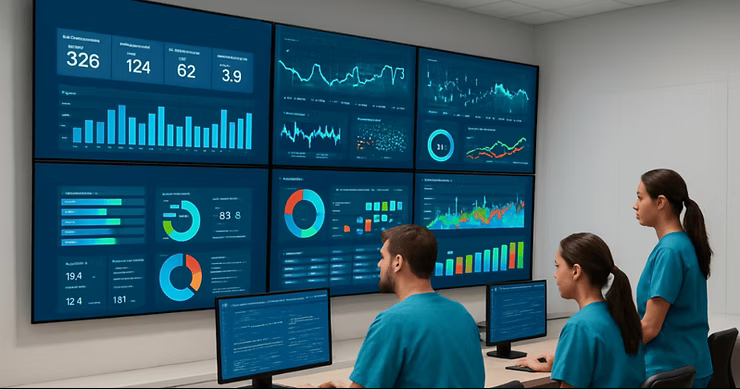
Healthcare data analytics dashboard.
Implementation Analytics
Real-time monitoring of project progress, user adoption rates, and system performance that enables immediate course corrections when issues emerge.
Workflow Optimization
Data-driven insights that identify bottlenecks, inefficiencies, and improvement opportunities that manual observation might miss during implementation phases.
Compliance Monitoring
Automated tracking of regulatory adherence metrics that ensures new systems maintain compliance throughout implementation and beyond.
Predictive Insights
Analytics that identify potential issues before they become problems, enabling proactive project management that prevents disruptions to critical healthcare operations.
ROI Measurement
Comprehensive tracking of project benefits, cost savings, and efficiency improvements that demonstrate tangible value to hospital leadership and support future investment decisions.
Why Healthcare Decontamination Projects Fail (And How to Prevent It)
Our experience managing sterile services implementations has revealed consistent patterns that distinguish successful projects from failures:
Failure Pattern 1: Ignoring Clinical Workflows
Projects that impose new systems on existing workflows without understanding why those workflows evolved fail because they create inefficiencies that experienced staff immediately recognise and resist.
Success Strategy: Design system implementations that enhance proven workflows rather than replacing them, incorporating clinical expertise into system configuration and training approaches.
Failure Pattern 2: Underestimating Compliance Complexity
Projects that treat regulatory requirements as simple checklists fail when they discover that compliance in healthcare involves complex, interconnected requirements that affect every aspect of system design and operation.
Success Strategy: Build compliance requirements into project design from the beginning, involving regulatory experts and quality assurance professionals throughout implementation planning and execution.
Failure Pattern 3: Inadequate Change Management
Projects that focus primarily on technical implementation without addressing the human factors fail because even perfect technology cannot succeed if staff lack confidence or buy-in.
Success Strategy: Implement comprehensive change management that respects professional expertise, provides adequate training, and ensures ongoing support throughout the transition period.
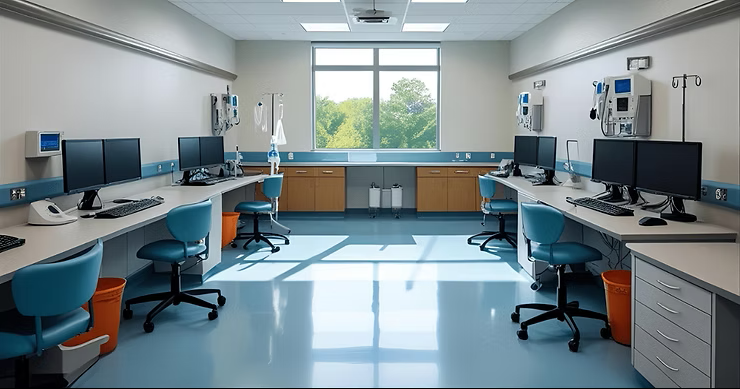
Hospital training room equipped with computers, medical equipment, and workstations.
Failure Pattern 4: Poor Vendor Coordination
Projects that fail to manage vendor relationships effectively struggle with systems that work in demonstrations but fail in real-world healthcare environments with their unique constraints and requirements.
Success Strategy: Maintain active vendor management that ensures healthcare-specific requirements are understood, tested, and validated before go-live dates.
The Future of Sterile Services Project Management
As healthcare technology becomes increasingly sophisticated, the gap between successful and failed implementations will widen. Organisations that master healthcare-specific project management will gain significant competitive advantages, while those that treat healthcare implementations like business projects will continue struggling with expensive technology that fails to deliver promised benefits.
The future belongs to healthcare organisations that understand sterile services project management as a specialised discipline requiring deep domain expertise, not just general project management skills.
Technology Integration
Future projects will require seamless integration between sterile services systems and broader hospital technology infrastructure, demanding project management expertise that understands both domains.
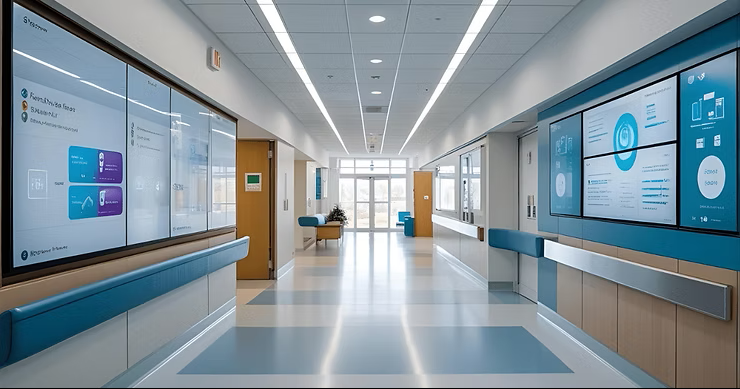
Modern hospital corridor featuring digital information displays.
Regulatory Evolution
Changing compliance requirements will require project management approaches that can adapt quickly while maintaining operational continuity throughout transition periods.
Staff Empowerment
Successful implementations will increasingly involve healthcare professionals in system design and optimisation rather than imposing external solutions on clinical workflows.
Continuous Improvement
Organisations will require project management expertise that extends beyond initial implementation to ongoing optimisation and enhancement of healthcare technology investments.

Hospital project management meeting.
GM61's proven track record in healthcare project management, combined with our specialised expertise in sterile services and data analytics, positions us as the ideal partner for healthcare organisations ready to achieve genuine transformation through strategic technology implementation.
For healthcare leaders seeking innovative IT solutions, the choice isn't whether to invest in new technology; it's whether to work with project management experts who understand that successful healthcare implementations require specialised expertise in both technical excellence and healthcare operational realities.
Ready to ensure your next sterile services technology investment delivers genuine operational improvements rather than expensive complications? Contact GM61 to explore project management approaches that transform technology purchases into competitive advantages.